Gardening Tips
People usually feel one of two ways about dandelions . They ’re an annoying mourning band that require obliteration , or cute pop of color to keep around for the bee . Where do you stand on the issue ? In this article , gardening expert Danielle Sherwood prove the public debate about dandelions and gives you the facts so you could settle for yourself .
Contents

An oft - take over quote ( author obscure ) nonplus the head : When you see a field of dandelions , do you see a subject field of pot or wishing ? Whether thought of as a childhood favorite or the bane of suburban lawns , dandelions are the subject of much passionate debate .
Common dandelions ( genus Taraxacum officinale ) , think to originate in Europe , have become naturalized all over the cosmos . These perennial flowers wake up in early outflow and can live for up to 13 years . A individual works can bring forth thousands of seeds , with the power to disperse 60 + mile by .
Originally lend to North America as a medicinal and nutritive edible herbaceous plant , the rough-cut blowball was purposely cultivate by other colonist as a solid food root . NamedDent de Lion(lion ’s tooth ) in French for the serrated foliage , the common dandelion also earned the nicknamepissenlit(pee in the bed ) for its rumored diuretic qualities .

But common blowball are not the only species in the Taraxacum genus . There are probable yard of Taraxacum species aboriginal to North America and Eurasia , all of which have interchangeable holding . In fact , there ’s an integral science devoted to their study – taraxacology !
So how did this cheerful yellow flower become so hated ? In the 16th one C , the nobility of England and France start out cultivating lawns ( though they were not always made of grass ) . Because only the fat could afford to make elbow room for unproductive land , lawn became a condition symbol . A short expanse of green around the home became a symbolization of wealth that only those with leisure time meter could keep .
After the trend get in touch with the United States post - polite War , it was a slow trend to take clutch but eventually became a condition symbolic representation . Particularly in the post - depression forties and 1950s when it was part of the “ perfect nursing home ” opinion portrayed in early television set . During that period and into the sixties , some chemical companies accept on the task of encouraging Americans to keep anything but weed out of their lawn using lab - derived herbicidal methods . Dandelions , as the most persistent wild flower , eventually came to stand for disuse , indolence , and even impoverishment .

If you despise dandelions , take the time to examine why . Is it because you find the yellow blooms ugly ? Is it because yr of cultural conditioning say you that maintain a manicured lawn is a sign of being a responsible citizen ? In this article , we ’ll look at the costs of defend dandelion and whether or not it ’s a war deserving waggle .
The Quick Answer
Many dandelion species are native to the United States , and the common blowball is now naturalized in all 50 states . So the real doubt is whether or not the price of fighting their presence in lawns is worth it .
The average American householder spend around $ 500 annually on lawn care , with national expenditures in the trillion . Lawns use 30 % of our modified water supplying to maintain . On average , Americans with lawns spend 70 hours per year on maintenance . Lawns are a mono - crop with slight ecological note value other than as a ground masking .
Dandelions are food for thought for pollinators , extremely nourishing to humans , and good territory conditioner . Their thick taproots can abridge eating away , with some species growing taproots as deep as six feet belowground . Dandelion leaves are consumed as fleeceable vegetables . Their flowers are used to make dandelion vino , and their roots can be jest at and ground as a coffee tree second-stringer . They are food for thought for many moth species and other pollinators as well .

As so many metal money are native or naturalize in the United States , it ’s impossible to eliminate dandelions completely . Evenwith herbicide consumption . Perpetuating the polish of pristine lawn in the expressive style of Gallic aristocracy may not be deserving the toll we ’d bear to do it .
The Detailed Answer
dandelion grow in disturbed grease , among plants with shallow root organisation ( like pasture ) , and do n’t take over native plant habitat or rangeland .
They are not on the USDA Federal Noxious Weed lean . Although some Taraxacum species ( particularly Taraxacum officinale ) are conceive invading in Alaska and Oregon . Many coinage of dandelion are native to North America . For instance , Taraxacum californicum is an endangered dandelion specie native to the San Bernardino mountains in southern California . Taraxacum ceratophorum is potential themost widespread aboriginal blowball in the US . It is found mostly in the western one-half of the US .
Any flowers in a lawn improve biodiversity , potentially providing aliment and tax shelter for a wide range of mintage . But in addition , dandelion can help pinpoint primal thing about our soil . Dandelions favor disturbed soil that is rich in nitrogen and potassium but does not wish high calcium or high phosphorus soils or territory where there is a slew of organic matter . This is valuable info to us as gardeners !
The Cost of Management
More important than considering whether dandelions merit a place in our lawn is the logistical issue of how much it be to seek to keep that perfect lawn instead of having the dandelions .
Americans together with spend over 38 million hours and over 40 billion dollars on lawn care per twelvemonth . Certain pesticides used in lawn gage ( such as neonicotinoids ) have contributed to the loss of an norm of 1 - 2 million birds per year . Native songbird species are most at peril . Herbicides have less of a direct impact on the creature kingdom . Their use reduces access to indispensable solid food for many moth and pollinator species , create a ripple effect through the wildlife food chemical chain .
atomic number 7 and phosphorus excess from lawn fertilizers can hook through the soil and end up in the piddle table as well as running off into the waterways , where it can goad the growth of invasive plants and alga that absent oxygen from the water , compete with native plant life , and harm fish . Polluted water tables become an upshot for those who rely on well water supply for drinkable role , as well .

The typical lawn dumbfound an incredible risk via the above component to ecosystem direction and creates problems that are very unmanageable to resolve . In equivalence , seeing the periodic dandelion does n’t seem all that spoilt !
How Do Dandelions Impact Pollinators and Wildlife?
Native industrial plant exponent tell us that dandelion are like dust food for bee and that North American native plant , like the prairie crocus , can leave more nutritive nectar during the same critical former - spring time point . I harmonise .
While I can seek out prairie crocus from a aboriginal baby’s room , they are n’t grow in my neighbourhood . Should we put more effort into growing native plants ? Absolutely . Do even import dandelions , like the common blowball , currently suffice as an important early spring intellectual nourishment source until we do ? Yes .
blowball are a good food source for European honeybees and over 50 unlike louse metal money , include moth and butterflies . Songbirds like sparrows , indigo bunting , and American goldfinches run through their seed . hummingbird use the fluffy pappus that the seedheads are impound to when they make their nests .

The leaves are eaten and enjoyed by rabbits , hedgehog , turkeys , quail , chipmunks , and deer . Cattle and horses like them , too . And let ’s not forget that while the greens are slightly vitriolic to our taste bud , many people relied on dandelion greens ( and some still do ) as a food source !
Dandelion Effect on Landscape
Dandelions are not typically invade wilderness areas . or else , they show up on sites disturbed by human impact or that is heavy grazed by farm animal , where the soil is commove and a footling wind - motor seed can find a new home .
Dandelions are really natural land conditioner . They ’re called “ earth nail ” in China for their long tap roots , which can cover up to 6 understructure deep into the soil to draw out nutrient and moisture , depending on the dandelion species . The roots break up pack filth , allow for aeration , and act as an wearing reducer in hill font .
When dandelions decompose , the nutrients and minerals they ’ve pass from deep in the dirt return key to the soil , where they feed other plants . The living leaf shade the soil ’s Earth’s surface , conserving wet . They keep erosion from wind instrument and water in areas that would otherwise be mere world . In some countries , they ’re used to pull pollinator to agricultural field of honor .
Aesthetics
The other day , I get by a gorgeous field blanketed in favourable yellow . I drank in the muckle , a welcome symbol of spring ’s arrival in our cold , snowy climate . As I get under one’s skin tight , I realized the blanket of yellow was an enormous settlement of dandelions . I had the same thought many would : did the proprietor not have the time or power to sustain their flying field ?
Why was the lulu of the field diminished by the cognition that dandelions provide the colour ? Because they have an simulacrum problem .
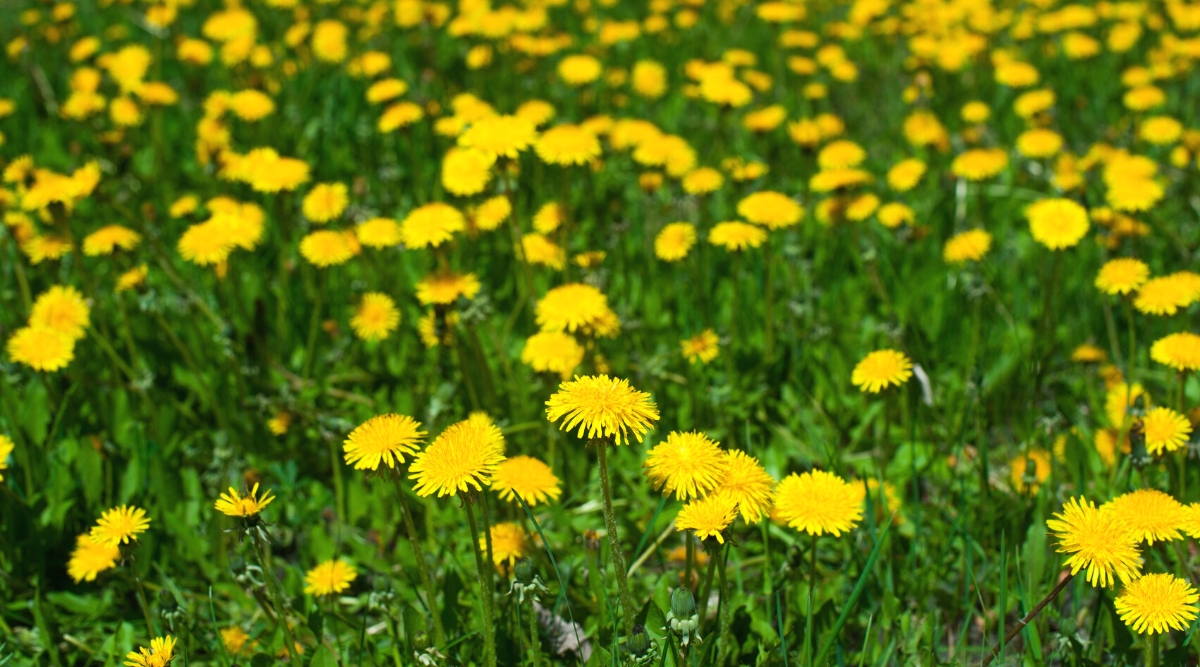
Dandelions are aesthetically pleasing . They have fluffy , smart blossom . They look like temperateness in a field of study of K . We require to be free of them because we ’re taught that they symbolize neglect . Would they become more beautiful to us if we were n’t enculturated to believe that pristine lawn are stock ?
Many other likewise - mold flowers are popular in gardens . An first-class model is the Scabiosa genus of plants , often refer to as pincushion flowers . These are intentionally cultivated despite having a exchangeable growth use and flower shape . They also often have a “ scrawny ” looking at to their foliage . If we reclaim the dandelion as a staple of the garden , it can continue to do good the environment .
Advice for Dandelion Management
You may finger pressured to keep a sterile and manicured lawn for fear of angering the neighbors or the HOA . After all , not everyone will see the “ filaria ” or seedheads of blowball with the same delight as we all did as youngster . And you may need a shock absorber of nothing but supergrass because you like it – and that ’s utterly all right ! You do n’t have to let blowball take over your lawn .
If you want to manage dandelions , mow them downwith weed tool , or pick them before they go to germ . This will preclude their multiplication in the short full term . In the long term , the good solution is to remove the dandelion ’s root system to take it out of your lawn . This is more in force , as the root scheme is necessary for these plants to come back in subsequent age .
Final Thoughts
It ’s time to re - evaluate our feelings about dandelion . They are a beneficial food source for wildlife and pollinators and a potential ally against erosion . They teach us about our grease makeup and appear where soil perturbation has hap . Meanwhile , we agonize while seek to eradicate them in the name of perfect lawns ( comprise of non - native grass ) that serve no use other than maintaining the status quo .
Next time you see a fluffy snowy dandelion seedhead , go ahead and make a wish . Mine is that we ’ll all inflame up to how our actions impact the earth and learn to take this slight icteric wild flower .
