By now , you have probably heard of a lethal disease name citrus greening that scourge Florida ’s citrus industry and is now on the march in California .
While most of the news concern California ’s $ 2.5 billion citrous fruit industry , what about dear trees in family yards ? Some of these have been pass down through propagation and appointment to the 1800s .
As of 2016 , there were between 10 and 20 million residential citrus tree in California . In fact , more than 60 % of homeownersin the state have at least one citrus Sir Herbert Beerbohm Tree in their M .

An orange infected with HLB.
Citrus greening has yet to taint commercial grove . As of late May 2019 , it has only been notice on residential place .
We connect to vendors to aid you find relevant products . If you buy from one of our links , we may earn a commission .
The state of California is work smartly to keep the disease out of commercial-grade groves .

An orange infected with HLB.
Even a 20 % reduction in the amount of land that citrus is grown on in California would ensue in7,350 mislay jobsand a half billion dollar step-down in the province ’s Gross Domestic Product ( GDP ) .
The fate of your trees will likely depend on what part of California you inhabit in . We at Gardener ’s Path will tell you what to anticipate as your tree diagram face this impending threat , with steps that can be taken to prevent its gap .
Here ’s what ’s to come in this clause :
How to Identify and Prevent Citrus Greening Disease (HLB)
A Two-Pronged Attack
As the expression goes , it takes two to tango . The threat from citrus rejuvenation hail from the combination of a foreign insect that overrun citrus fruit trees , and the bacteria it can carry that cause the disease .
Neither of these organism can hurt pets or people . They are only a threat to citrus .
First total the worm – an aphid - sized pest roll in the hay as the Asiatic citrus psyllid ( ACP ) that hails ( not astonishingly ) from Asia .

Not every insect carries the bacterium , HLB ( brusk for Huanglongbing ) which is eff officially asCandidatus Liberibacter asiaticus .
As of the time of this authorship , 28 counties in California presently have ACP infestations , so there are strict limitation on what citrus fruit can be bring into these areas .
The presence of ACP can think that HLB is not far behind , so agricultural specialists and the United States Department of State of California take it very seriously if your Sir Herbert Beerbohm Tree has an ACP infestation .

At the minute , there is no cure for this disease . The fruit on infected tree will protrude taste acrimonious , and the Sir Herbert Beerbohm Tree will decline until it dies – spreading HLB to other Sir Herbert Beerbohm Tree in the process .
What Areas of California Face the Greatest Threat?
The first character of HLB in California was identified in 2012 in a Citrus decumana in a yard in Hacienda Heights , California , located in Los Angeles County . The next infected tree was n’t identified until 2015 .
In 2019 , the disease has spread in Los Angeles County , and into Orange County and Riverside County as well .
There are two sets of quarantine – one for the worm , and a more stringent one for the disease .

At the metre of this writing , all of Los Angeles County and part of Orange County are under quarantine because of the ACP , as is part of Riverside County .
The quarantine that was established on April 17 , 2019 , extend from Inglewood and Torrance in the west , north to Arcadia and Glenora , and Confederacy to Costa Mesa and Huntington Beach .
What does this mean for you if you live in a quarantine area ? Your fruit is safe to eat , but you should n’t sell it or give it away to anyone who lives in another area . And absolutely do n’t move any tree parts like cuttings out of your area .

Since HLB will not circularize without the ACP , cognition of the whereabouts of these insects is crucial to containing the spread of citrous fruit greening .
The peril is the greatest in climate where citrus trees frequently grow unexampled leaf , which favour ACP education and feeding .
This mean that the Inland Empire and coastal districts of Southern California are prime feeding grounds for ACP .

Fortunately for agriculturalist in the San Joaquin Valley , the live , ironical weather does n’t favour the insects . Growers in this field have been able-bodied to keep ACP populations below detectable levels for most of the year .
How to Look for ACP or HLB
inspect your trees might be a minute more Byzantine than you think , since homeowners often do n’t take in that other plants in the Rutaceae family can harbor the psylla .
Examples include wampee andMurrayaspecies , such as orange jasmine , mock Orange River , andcurry leaf tree diagram . All of these plants can serve up as hosts for the psyllid , as well as all members of the citrus genus .
The Insect
You should check your trees for psylla each month . This is particularly crucial when you see folio bang , or tiny new foliage growing .
You will have hassle observing the grownup psyllids because they fly , and their orchis are midget .
Your practiced bet is to attend for the nymph . They stay on the new leaves , do n’t move much , and most importantly , they produce waxy white tubule that await unequalled .

The Disease
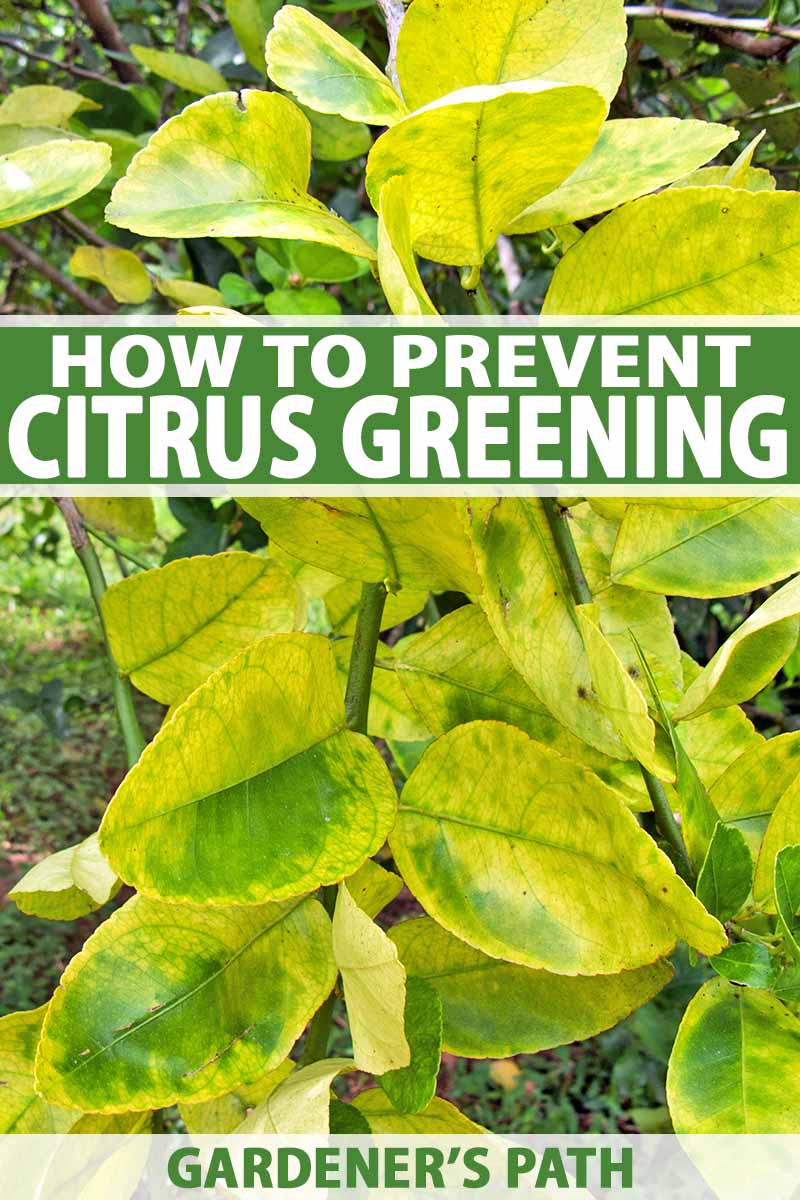
Yellowed leave of absence are the first and most crucial symptom . However , citrus often has yellowed leave because of nutrient deficiencies .
you could tell the difference because leaves that are white-livered due to a alimentary deficiency have a alike pattern of yellow on both sides of the leaf .
In contrast , HLB cause blotched yellow mottling that varies from one side to the other . This show is why HLB translates directly to “ chicken dragon disease . ”

Another indicator that the disease is due to HLB is that the veins may be corky .
What to Do if You Find ACP or HLB
If you find an ACP on your citrous fruit , your first step should be tocheck the up - to - date mapof where the worm have been found in your region .
The site that host this function is the country ’s official repository of information on the spread of ACP and HLB in California . It is cope by the Division of Agriculture & Natural Resources of the University of California .
What you do next will depend on where you live in California . If you last in the northerly or central part of the commonwealth where the worm is rare , immediately call the Pest Hotline at the California Department of Food and Agriculture ( CDFA ) at this bit : 1 - 800 - 491 - 1899 .

Experts will come to your menage to swear that the insect in question is indeed an ACP , and they will also treat your citrus tree tree to extinguish the insect in your area .
If you are in Southern California , ACPs are well establish . You should treat your trees yourself , or call a licensed pesticide applier .
If you think your tree is infected , call the CDFA Pest Hotline bit or your local agricultural commissioner ’s office ASAP . An expert will come out and take a leafage sample to set if it is infected with the bacteria .

You should nearly monitor the spread of HLB . Check the current map of psylla , HLB , and parasite to see how close HLB is to your attribute .
You should consider replace your citrus tree with a non - citrus one if the disease has been found in or near your neighborhood .
If this is the event , your tree is plausibly already taint . The trouble is that it can take a long metre to name this disease , and ACPs could be propagate the disease without your knowledge .

What to Expect During an Inspection
1. Notification and ACP Sampling
This is nothing to be feared and will only happen if ACPs or the disease are find in your area , or local citrus raiser are treating their crops .
2. Treatment
If your tree needs intervention , you will be receive to attend a public informational coming together . There , you’re able to get your questions do by the expert .
handling happens in three case :
You do not need to be present for the discourse , although the extremely trained specialiser will be glad to schedule a prison term if you have a specific request .

If you are not home , they will lend oneself insecticides safely and only to the citrus tree . There are two ways of spraying :
Once the treatment has been completed , the medical specialist will allow you a observance to confirm this .
3. Disease Testing
Samples will be sent to a lab to look for HLB . The lab utilize rigorous tests that receive Union standard . You will be notify like a shot if your tree diagram tests positivist for HLB .
Unfortunately , this mental test is not always effective at detecting HLB . The being is n’t found evenly in all parts of a tree , so it ’s easy to omit during the sampling .
California officials are presently testingtrained dogs that have been 99 % effectiveat detecting HLB in Florida . If they officiate as well in California , this will greatly zip up detection of the pathogen .
4. Removal
If your tree is infected , it will be take away at no cost to you to forbid the disease from spreading .
Treatment Options for the Asian Citrus Psyllid
These insects are difficult to eradicate ! They are easy to kill , but their populations rebound quick . And they can travel farseeing distance , either by being comport by the winding or by flying .
The country of California use both insecticides and rude predator to treat ACPs .
you’re able to either treat the ACPs on your citrous fruit yourself , which has a low to moderate level of effectiveness , or you’re able to fetch in professionals . Their discourse are highly effective against ACPs .
You have a choice of definitive insecticides or insecticidal soaps , crude oil , and pyrethrins . Recent research from Floridasuggests a compounding of organic insect powder and insecticidal soaps and oils .
Biological Control
The State of California favour biological controls in the county in which ACPs are well established , and that have scatter residential trees in urban centers far from commercial grove .
farming officials decide that it would be more cost effective to release lifelike predators of the Asian citrus jumping plant louse than to spray in these areas .
However , finding a natural foe was not piffling . Suchbeneficial insectsare much more abundant in a place where a pestilence has acquire . Part of the reason that beast and plants can spread so widely in a new area is that they result their enemy behind !
One dedicated researcher , Mark Hoddle , give-up the ghost to Pakistan to name possible foeman of the ACP . He identified nine type of insects that showed hope and narrow his list down to two bloodsucking white Anglo-Saxon Protestant that were suitable for California ’s mood , and did not present any noticeable terror to aboriginal plant life and animals .
Between 2011 and 2019 , more than ten million tiny stingless wasps were raised and liberate in Southern California , at residential site range from Imperial County to Santa Barbara .
The most commonly used wasp isTamarixia radiata , whileDiaphorencyrtis aligarhensiswasps have also been give up .
While these biologic restraint white Anglo-Saxon Protestant will not eradicate ACPs , researchers are affirmative that they can help to keep the populations downcast until an HLB cure is found .
One critical thing to keep in mind if your tree is home to these parasitical wasp is that you must keep ants under control . They like to feed on the honeydew grow by the ACP nymph . And they will eat the parasitical wasps !
Organic Insecticide Treatments
It is important to apply delicate insecticides , such as fossil oil and soaps , if the parasitic wasps have been released near you .
An bugology professor in Florida conducted exciting inquiry on choice to ceremonious insecticides to control asp .
Dr. Jawwad Qureshi and his colleagues find that tack organic insecticide with either 435 Oil from PetroCanada or the insecticidal soap M - Pede controlled this pest as well as conventional insecticides over the two - year menstruum of his study .
constitutive insecticides advocate by the University of California ’s Statewide Integrated Pest Management System admit spinosad ( Entrust SC ) and pyrethins ( PyGanic EC5.011 and EC1.411 ) .
One affair to keep in mind if you go this path is that you demand to check that that you are making tangency with the insect ’s body when you spray .
You will also have to treat your tree more frequently than if you were to use conventional insecticides .
Asiatic Citrus Psyllid Detector Traps , Hangers , and lure
California experts commend that you check for the insects every two weeks . you may purchase sticky traps to target ACPs specifically , available via Arbico Organics .
However , these traps will only trap adult psyllids . And another trouble is that they are more attract to the leaves when they are flushing than to the traps .
If you find the psyllids , you should spray twice with organic insect powder , leaving a 10 to 14 - Clarence Shepard Day Jr. interval between applications . This should take care of these pests , but if you observe them again , continue spraying every 10 - 14 days until you do n’t find any more of them .
Conventional Insecticide Treatments
If you require to stick with conventional insecticides , you will require to spray the leave-taking and treat the soil . Foliar sprays of Sevin or Malathion are middling in force for the insects and should work for several workweek .
A soil drench will permeate through the tree and help contain the ACPs .
UC experts from the Division of Agriculture and Natural Resources recommend that you use Bayer Advanced Fruit , Citrus & Vegetable Insect Control if you see psyllids in the summertime or pin . This treatment should be good for months .
You should not implement insecticides while your tree diagram is in bloom , so youwon’t affect any bee .
The professionals that you may prefer to charter will use more powerful insecticide that are extremely effective against the ACP , providing protection for months . They will use the products Tempo and Merit .
As is plebeian with insecticide , the insect can train resistance to these pesticide . This has been a growing trouble in Florida where some farmers intensively spray their groves .
You Are on the Front Lines of Preventing the Spread of This Disease
While citrus rejuvenation has spread throughout many area and the res publica of Florida , experts in California are working hard to prevent a similar site from go on in the Golden State .
Since all of the contagion line up so far as of the time of this penning have been in residential or abandoned Tree , homeowners are on the front furrow in the fight to keep citrous fruit greening out of the commercial citrous fruit industry in California .
You should monitor for ACP and then act in the way of life that is best for where you live . In Southern California , you should treat your tree , or have it treated or absent . And be sure to report all finding to the appropriate environmental potency .
If the banquet of HLB can be minimized , California could continue its near $ 2.5 billion annual yield of citrus , while homeowners can keep their dear citrus fruit trees .
Only you may forestall HLB from overspread .
For more information on growing citrus fruits , you may get started here .
And to learn more about othercommon disease and pests that may chevy your garden , read more :
© call for the Experts , LLC . ALL right RESERVED.See our TOSfor more details . Insect photos via Wikimedia Commons . mathematical product photo via Arbico Organics . Uncredited picture : Shutterstock
About
Helga George , PhD
